Skip to content
VeraDial
Perspective

The Real Cost of a Missed Call for a Small Business

When you are on a ladder, under a sink, or sitting across from a client, your phone rings and you cannot pick up. It feels like a small thing in the moment. The trouble is that a missed call almost never costs you just the one call. It sets off a chain of small losses that add up to far more than the job you didn't answer.

By Graham Thomson · June 23, 2026 · 5 min read

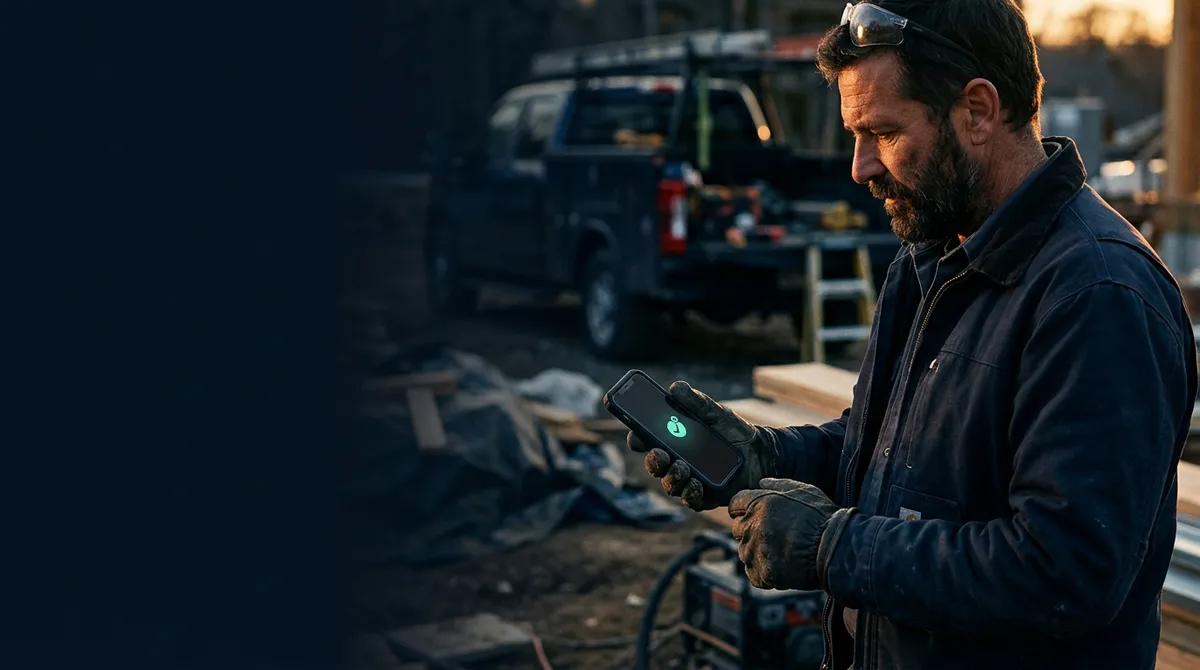
A tradesperson on a job site at golden hour glancing at a missed call with a mint-teal verified checkmark on the phone.
The short version
  • A missed call rarely costs one job. It costs the next call to your competitor, the eroded trust, and your reputation for being reachable.
  • You cannot answer every call live, and pretending you can is what burns you out. The realistic goal is a fast, professional response every time.
  • Outbound AI calling plus verified caller ID lets you confirm appointments and call missed leads back quickly, so a missed ring stops being a lost customer.

It is never just one job

It is tempting to price a missed call as a single number. Say a job is worth $400; miss the call, lose the $400. But that math is too kind to the missed call, because the one job is only the first thing you lose.

The bigger costs are the ones that do not show up on an invoice. The caller dials the next name on their list. The relationship that job would have started never begins. And quietly, your reputation for being the kind of business that picks up takes a small hit. Those losses do not feel like much on any single Tuesday. Over a year of Tuesdays, they are the difference between a busy operation and one that is always wondering where the work went.

What the caller does in the next sixty seconds

Put yourself on the other end of the line. Someone has a leak, a showing they want to book, a quote they need today. They are not calling for fun; they have a problem and they want it handled. When you do not answer, they do not sit by the phone hoping you call back. They keep dialing.

This is the part that makes a missed call so expensive. The person was, for a brief window, ready to choose you. By the time you notice the missed call and ring back an hour later, they may already be booked with whoever picked up first. You were not beaten on price or on quality. You were beaten on being available in the moment they were ready to commit.

  • They call the next business on the search results, often within a minute.
  • If someone else answers and sounds competent, the decision is effectively made.
  • A callback that comes hours later arrives after the buying moment has passed.

The slow erosion you do not see

The single lost job is the visible cost. The erosion underneath it is the one that actually compounds. Every unanswered call and every voicemail that sits for half a day teaches a caller something about how reachable you are, and people remember that.

A prospect who could not get through once might still try you again. A prospect who could not get through twice usually does not. And the ones who never reach you at all cannot leave a bad review or warn a neighbor, which sounds like a relief until you realize it also means you never find out why the phone went quiet. You just feel the volume drop and assume the market got slow.

None of this means you are doing a bad job on the work itself. You can be the best contractor or agent in your area and still lose steadily to businesses that are simply easier to get a response from. Reachability is its own kind of quality, and customers grade you on it whether you meant to compete there or not.

You cannot answer every call, and you should stop trying to

The usual advice here is some version of "answer your phone." It is useless advice. You are a one or two person operation doing the actual work; you physically cannot stop mid-job for every ring, and trying to is a fast path to doing both the job and the phone badly.

So the real question is not how to answer every call live. It is how to make sure every call gets a fast, professional response even when you cannot pick up in the moment. Those are different problems, and the second one is solvable without cloning yourself.

Drawing that line honestly is the whole game. Some calls genuinely need you on the line right then. Most of the day-to-day ones, though, do not need you specifically. They need a prompt, competent response that protects the relationship until you can step in.

Closing the gap with fast callbacks and confirmations

This is the gap VeraDial is built to close, and it is worth being precise about how. VeraDial makes outbound calls for you. You give the AI a goal and a caller profile, it places the call, and you get back a full transcript and summary. It always says it is an AI at the start, and it calls from a verified business number with proper STIR/SHAKEN attestation, so the call shows up as you and not as a suspicious unknown.

In practice that means two things for the cost of a missed call. First, fast callbacks. When a lead slips past you, the AI can call them back quickly while they are still deciding, instead of that callback waiting until tonight when you finally clear your inbox and the lead is already gone. Second, confirmations. Booked appointments get confirmed the day before without you working the phone after dinner, which keeps your calendar from quietly bleeding no-shows.

Neither of these is about replacing the calls where you matter. It is about making sure the ordinary, time-sensitive ones, the callback and the confirmation, actually happen on time. That is usually where missed-call money is leaking, and it is a leak you can close without hiring anyone or chaining yourself to the phone.

FAQ

What does a missed call actually cost a small business?

More than the single job you didn't answer. The realistic cost includes the caller moving on to a competitor, the relationship that job would have started, and a gradual hit to your reputation for being reachable. The lost job is the visible part; the compounding loss of future work is usually the larger one.

I can't answer every call. Isn't some missed business just unavoidable?

You cannot answer every call live, and you should not try to. What you can control is the response. A missed ring only becomes a lost customer when nobody follows up in time. VeraDial can screen and forward the calls you cannot take, and call people back fast when you are heads-down, so the relationship stays alive even on the calls you physically could not pick up.

Does VeraDial answer my incoming calls for me?

Yes — in a triage sense, today. VeraDial can screen and forward your inbound calls: the AI answers, asks who is calling and why, forwards the ones worth your time, and routes spam to voicemail, so a missed ring still gets handled. It also makes fast outbound callbacks and confirms appointments from your verified business number, with the AI identifying itself. The fuller receptionist that books and takes detailed intake is still coming, but screening, forwarding, and callbacks all work now.

Graham Thomson, Founder of VeraDial

Graham Thomson

Founder of VeraDial, building verified business calling for small operators. About the founder →

Audio demo

Hear Vera in action.

Play a short sample call, follow the transcript, and move into a personalized live demo when you're ready.

Play the sampleNo download · no form · start the live demo anytime